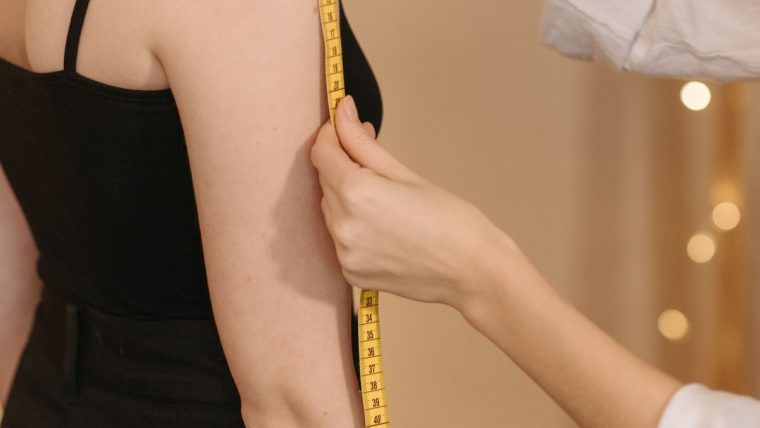

Online reviews are most useful when you treat them as a dataset, not a vote. “Runs small” may mean tight shoulders to one shopper, a shorter hem than expected to another, or simply a closer fit than that person prefers. On a SHEIN product page, combine the item-specific chart with fit descriptions, material details, reviewer measurements, and customer images. Each source answers a different question.
Begin with objective product-page evidence
Open the chart for the exact item rather than starting with the average review. Confirm the measurement units and whether the numbers refer to the body or the finished garment. Note the measurements most likely to control fit: bust and shoulder for a blouse, waist and hip for a skirt, or rise and inseam for jeans.
Next, read the product description and material composition. Terms such as fitted, regular, loose, oversized, high rise, cropped, or drop shoulder describe the intended silhouette. Stretch information affects how forgiving the measurement may be. A small difference in a rigid woven garment matters differently from the same difference in an elastic rib knit.
Translate fit notes into specific questions
A general fit indicator can flag a pattern, but it does not explain the cause. When shoppers report that an item runs small, look for repeated details: Is the waistband tight, are sleeves narrow, or is the entire garment scaled down? When an item runs large, determine whether it has extra body width, longer straps, a lower neckline, or an intentionally oversized cut.
Make the language concrete. Replace “too small” with “reviewers near my hip measurement could not sit comfortably in the non-stretch size medium.” Replace “perfect fit” with “the shoulder seam and sleeve length match my preference on reviewers with similar proportions.” Specific claims can be compared; broad praise cannot.
Prioritize reviews with usable context
The strongest review usually includes several pieces of evidence: the purchased size, body measurements, height, a fit description, and ideally photos. Weight may provide context but is not a reliable sizing measurement because bodies distribute weight differently. Height helps with length, yet torso and leg proportions still vary.
Give more weight to reviews that resemble you in the measurement controlling the garment. For rigid pants, similar hip and thigh dimensions can matter more than the reviewer’s usual dress size. For a structured jacket, shoulder and chest details may be decisive. For an adjustable, flowing dress, length and bust coverage may deserve more attention.
Read customer photos critically
Customer photos can reveal details that studio styling minimizes: fabric drape, cling, opacity, seam placement, pocket shape, and actual hem position. Compare front, side, and back views when available. Observe whether the fabric pulls into horizontal lines, gaps at fasteners, or collapses where structure was expected.
Photos also have limits. Camera angle, pose, lighting, filters, undergarments, and styling can alter the impression. A review image does not prove color accuracy on your screen or predict fit on your body. Use several photos and connect what you see to the reviewer’s stated size and measurements.
Separate garment issues from preference
Two honest reviews can disagree because the shoppers want different silhouettes. One may call a shirt shapeless while another values its relaxed cut. One may dislike a short inseam while another intentionally wanted ankle length. Look for preference words—tight, modest, oversized, compressive, flowy—and decide whether you share that preference.
Construction variation can also produce disagreement, especially when reviewers bought different colors or at different times. Confirm that a review refers to the same listing and, when visible, the same variation you are considering. Product details and inventory can change, so recheck the official page rather than relying on cached information or an old social post.
Build a simple review sample
Instead of scrolling until one comment confirms your first choice, collect a balanced sample. Read several recent detailed reviews, a few reviews from shoppers with similar measurements, and both favorable and critical comments. Write down recurring observations. A small evidence table can prevent selective reading.
- Measurement match: Which reviewer dimensions are close to yours?
- Purchased size: What size did each comparable reviewer choose?
- Fit location: Where was it tight, loose, short, or long?
- Fabric behavior: Did shoppers consistently describe stretch, drape, or opacity?
- Photo evidence: Does the visible fit support the written description?
Patterns matter more than isolated statements. If several measurement-rich reviews independently mention narrow sleeves, that is stronger evidence than one unexplained low rating. If comments conflict, the chart and your comparison garment should remain the anchor.
Handle conflicting size recommendations
When evidence points to two sizes, identify your nonnegotiable. For a non-stretch jumpsuit, torso length may determine whether either size works. For a fitted knit, you might prioritize waist definition. For a jacket, decide whether it must close over layers. Then compare the chart values with both your body and a similar garment you own.
Do not size down merely because an item is labeled oversized; the shoulders, armholes, and length may still be designed for the listed size. Likewise, do not automatically size up when reviews say “small” without knowing where. Changing sizes affects every dimension, not only the problem area.
A repeatable decision sequence
- Record your current body measurements.
- Read the exact item chart and definitions.
- Identify the garment’s controlling fit points.
- Note fabric, stretch, cut, and desired ease.
- Filter reviews mentally for comparable measurements and useful detail.
- Inspect multiple customer photos for recurring fit signals.
- Choose based on the most consequential constraint, not the size label.
- Confirm current product details and applicable terms on the official site or app.
Reviews reduce uncertainty; they do not eliminate it. The best decision comes from triangulation: chart numbers establish a baseline, product details explain intended behavior, and well-documented reviews show how that design performs on real people. Used together, they are far more informative than a simple true-to-size percentage.